A note on how this guide is written: every factual claim below is sourced and linked at the point it's made. Where I'm giving you my own advice rather than citing a documented fact — what to pack, which trip to book first — it's written plainly as advice, not dressed up as something official.
Introduction
Most people who've heard of Maamigili heard about it for one reason: the whale sharks. This small local island on the southern edge of South Ari Atoll sits beside one of the only places on Earth where whale sharks stay in the water every month of the year — not migrating through, but living there. That single fact has quietly turned a working Maldivian fishing island into one of the country's most talked-about local-island bases.
It's more than a jumping-off point for one animal, though. Maamigili has its own airport — the only one in South Ari Atoll — so visitors can land and be in the water the same afternoon, without the extra boat leg that resort islands elsewhere in the Maldives usually require. It has a working harbour, a mosque, small shops, local cafés, and just under 2,800 residents going about ordinary life. It also has its own Bikini Beach, guesthouse prices well below resort rates, and direct access to manta ray and turtle sites that would otherwise cost a private-island premium to reach.
This guide covers what you actually need to plan a trip here: how to get in, when to go, what's genuinely worth doing, the local-island rules worth knowing before you land, and how staying here compares to a resort island instead.
It's written by the team at Vilu Residence, a family-run six-room guesthouse based on Maamigili itself — so the details here come from people who live and work on the island, not a general travel-site summary.
Where is Maamigili?
Maamigili is an inhabited island in Alif Dhaal Atoll — the administrative atoll that's marketed to travelers as "South Ari Atoll." It sits at 03°28′30″N, 72°50′15″E, about 107.51 km (67 miles) southwest of Malé, the Maldivian capital. (Wikipedia)
The island itself is small and distinctively round — about 1.35 km long and 0.775 km wide, a shape attributed to its position on the edge of one of the widest channels in the South Ari Marine Protected Area. It's the largest and most populous island in Alif Dhaal Atoll: 2,798 residents as of the 2022 census, up from 2,079 in 2014 and 1,671 in 2006 — growth of roughly two-thirds in under two decades. (Wikipedia)
What that growth looks like on the ground: a deep-water harbour, an east-west main street lined with shops, a mosque, a medical center, and a school — the everyday infrastructure of a working island, not a tourist facade built to look the part. A handful of taxis and pickup trucks handle local transport, though most of the island is easily walkable. It runs on Maldives Standard Time (UTC+05:00) year-round, with no daylight saving changes. (Wikipedia)
Locally, you'll sometimes hear Maamigili called "Whale Shark Island" — an informal nickname, not an official one, but it tells you exactly why people come.
Why Visit Maamigili?
Three things set it apart from the destinations that dominate a first Maldives search:
Year-round whale sharks, close by
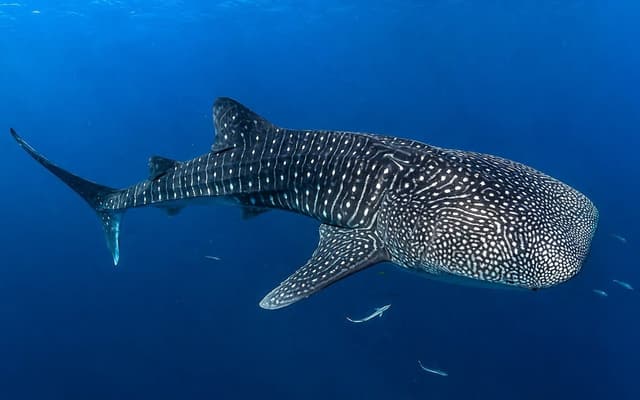
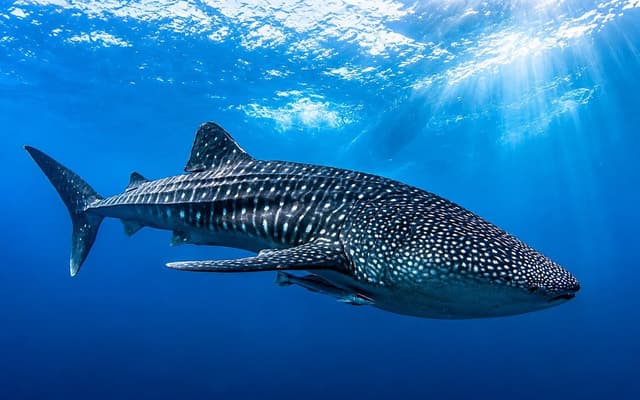
The South Ari Marine Protected Area, which borders Maamigili directly, hosts a resident whale shark aggregation present every month of the year, not on a seasonal migration — the kind of continuous, site-faithful presence peer-reviewed research finds at only a few places worldwide. See Whale Sharks below for the full detail.
An airport on the island itself
Villa International Airport sits on Maamigili's own reclaimed land — the only airport in South Ari Atoll. Many Maldivian trips mean a domestic flight and then a separate speedboat to a different island. Here, landing and arriving are close to the same event.
Real island life, resort-level access
Staying on a local island rather than a private resort means direct proximity to the same reefs, whale shark grounds, and manta ray sites, at guesthouse prices, alongside an actual functioning community rather than a self-contained compound.
See the full comparison: guesthouse island vs. resort island →
How to Reach Maamigili
There are two realistic ways in from Malé (Velana International Airport):
| Method | Duration | Cost | Frequency | Notes |
|---|---|---|---|---|
| Domestic flight to Villa International Airport | ~20–30 min | See current fares | 3–5 flights daily | Mainly operated by Flyme (Villa Air); lands directly on Maamigili |
| Direct speedboat, Malé → Maamigili | ~90 min | Varies by operator/season | Daily except Friday | No flight needed; longer, and subject to sea conditions |
Sources: Wiotto transfer rates; Endherisunset getting-here guide; flight duration and airline via Wikipedia. Fares shift by season, operator, and how far ahead you book — see current pricing rather than treating any number here as a quote.
Which to pick: if you're short on time or traveling with real luggage, the domestic flight is the practical choice — you'll be at your guesthouse within the hour of landing in Malé. If your schedule has slack and the fare matters more than the extra hour, the direct speedboat gets you there without ever booking a domestic flight.
Because Villa International Airport (IATA: VAM) is physically on Maamigili, arriving by air skips the separate boat transfer that many other Maldivian destinations require after landing — often a 30–90 minute speedboat leg to reach the actual resort island. The airport opened as a domestic facility on 1 October 2011 and was upgraded to international standards on 1 March 2013, so some travelers can fly in on an international connection without transiting through Malé at all. (Wikipedia)
Exact current prices and flight schedules change often enough that they're better checked live than quoted here: see current transfer prices and schedules →
For the full picture — arrival and departure timing, international connections, weather disruption, and what to prepare before you fly — see our dedicated Getting to Maamigili guide.
Best Time to Visit Maamigili
Once you know how you're getting in, the next real question is when. The Maldives runs on two monsoon seasons: the northeast monsoon (the drier season, roughly December through April, though the exact turnover varies year to year) and the southwest monsoon (the wetter season, mid-May through November), with December and April as transitional months. (Maldives.com; This Island Life)
Whale sharks don't follow that calendar the way most marine life does — South Ari's resident population is there regardless of season, with sightings "every week of every month" according to the Maldives Whale Shark Research Programme. What does shift is their position along the reef: more toward the west during the December–April northeast monsoon, more toward the east during the May–November southwest monsoon. (Oceanographic Magazine; MWSRP)
Manta rays are more seasonal: sightings around Maamigili Beyru peak during the northeast monsoon, roughly February to April, when regional currents push manta populations toward South Ari specifically. (Divernet)
| Season | Months | Weather | Whale sharks | Manta rays |
|---|---|---|---|---|
| Northeast monsoon (dry) | Dec/Jan–Apr | Hot, sunny, calmer seas | Present, more toward the west | Peak season (Feb–Apr) |
| Transitional | Apr, Dec | Mixed | Present | Variable |
| Southwest monsoon (wet) | May–Nov | Warmer, more rainfall, occasional rough seas further north | Present, more toward the east | Lower likelihood |
If calm seas and reliably sunny days matter most to you, the dry season — roughly December to April — is the safer bet, and it overlaps with peak manta season. If dodging the Maldives' busiest, priciest months matters more, the wetter months still deliver year-round whale sharks, generally lower prices, and — since South Ari's rainy season runs milder than the wider Maldives average — fewer weather disruptions than a first-time visitor might expect.
For a fuller month-by-month breakdown across the whole Maldives, not just South Ari: Best Time to Visit guide →
Weather
Maamigili's climate follows the wider Maldives pattern: consistently warm year-round, with daytime highs typically 29–31°C (84–88°F) and nighttime lows rarely below 25°C (77°F). Averages across the year run roughly 25–32°C. (Weather-and-Climate.com; This Island Life)
Rain is rare during the dry season, roughly December to April. The wetter southwest monsoon runs roughly May through October/November, with September typically the wettest month, averaging around 243mm of rainfall. Even at its wettest, the Maldivian monsoon is markedly milder than in many neighboring South and Southeast Asian countries — short, heavy showers rather than sustained multi-day rain are the norm. (Maldives.com; Climates to Travel)
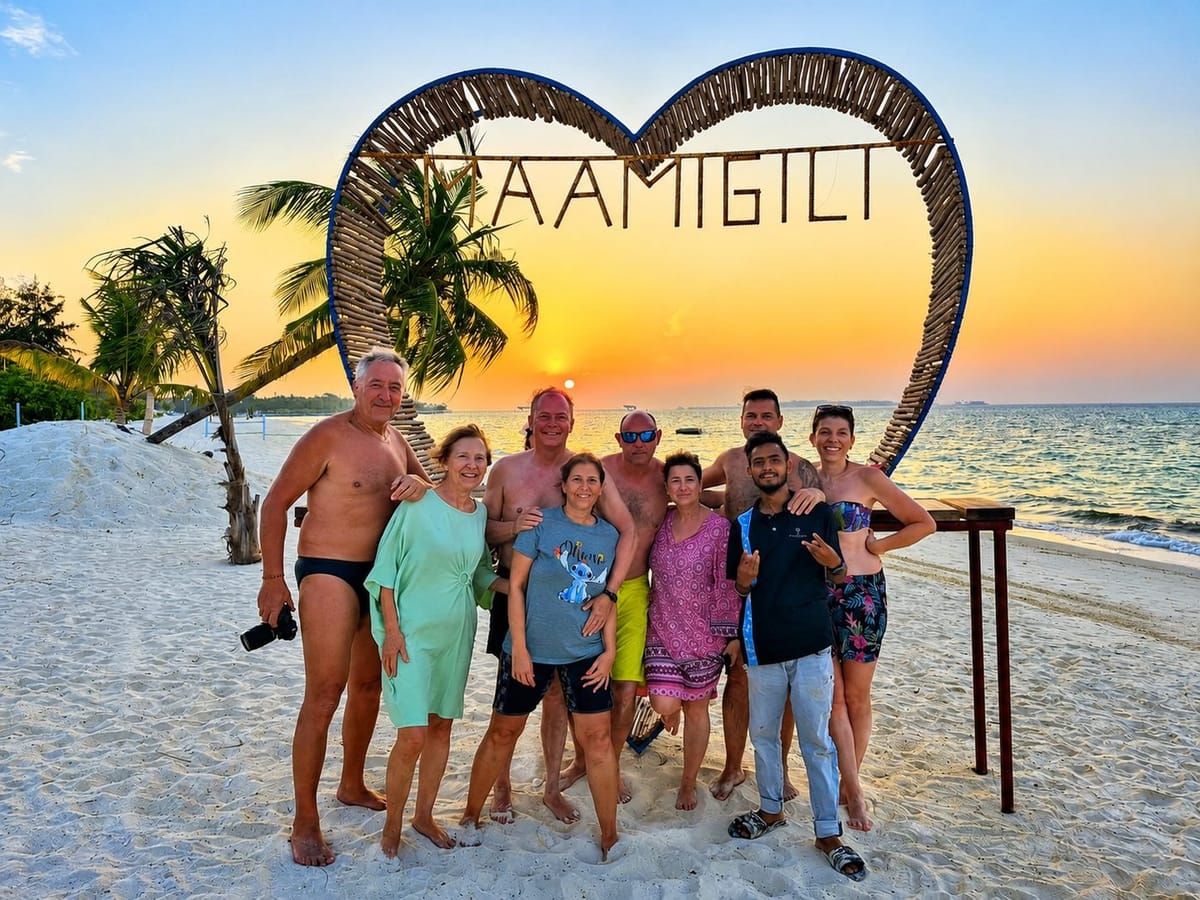
Sunset over Maamigili — the small local island at the heart of every Vilu holiday.
Pack for heat and humidity year-round rather than planning an entire wardrobe around "avoiding rain." Light, breathable clothing, reef-safe sunscreen, and one light rain layer for the wetter months will cover you in any season.
Whale Sharks
The South Ari Marine Protected Area, directly bordering Maamigili, holds a resident whale shark aggregation — predominantly juvenile males that stay along a roughly 14-km reef shelf every month of the year, rather than passing through on a seasonal migration the way whale sharks do almost everywhere else they're found. Peer-reviewed research describes this kind of continuous, site-faithful presence as occurring at only a few sites globally. (PADI; Harvey-Carroll et al., Scientific Reports 2021)
The Maldives Whale Shark Research Programme has studied and photo-identified individual whale sharks here for many years, using each shark's unique spot pattern the way a fingerprint identifies a person. (MWSRP)
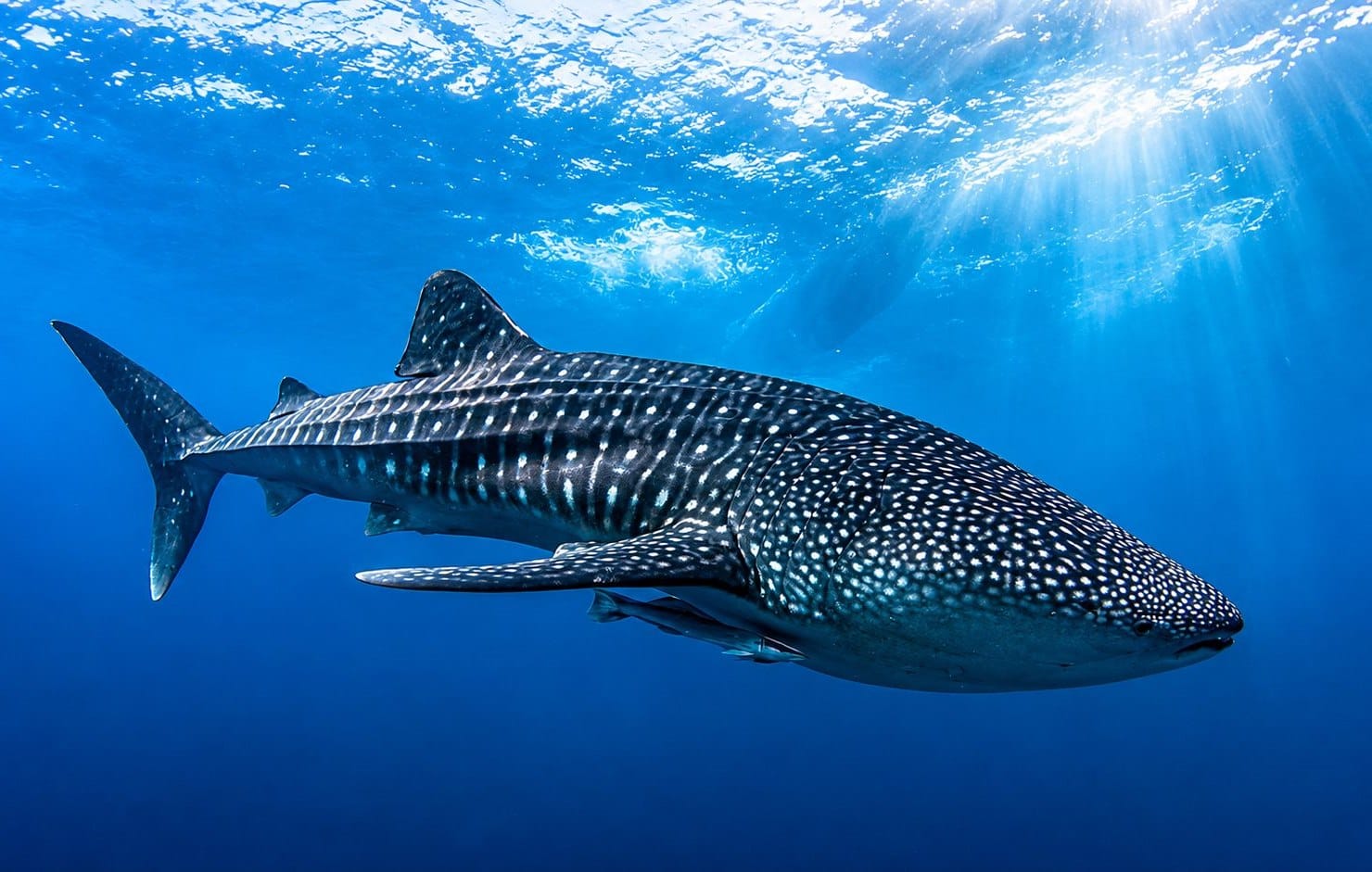
Researchers believe the juveniles use South Ari as a secondary nursery — conditions here suit their feeding and thermoregulation needs until they reach maturity around 30 years of age, which is a large part of why sightings stay this reliable compared to migratory whale shark populations elsewhere. Their position along the reef shifts with the monsoon — west-leaning December through April, east-leaning May through November — but the sightings themselves happen essentially every week, all year. (Oceanographic Magazine)
The reef is a protected zone. Fishing, anchoring on the reef, and chasing or touching whale sharks are all prohibited. Book with an operator that visibly enforces in-water conduct — a set distance, no touching, no flash photography — before every trip. It's not just an ethics preference: a shark that feels harassed dives and leaves faster, so a well-run trip is a better trip too. (Maldives Ministry of Environment)
For excursion-level detail — what a trip actually involves, what to expect in the water: full Whale Shark Snorkeling guide →
Manta Rays
Maamigili Beyru — the reef and marine protected zone along the island's outer edge — is also a known manta ray site, alongside reef sharks, rays, and a wide range of reef fish. Sightings here peak during the northeast monsoon, roughly February through April, when regional currents push manta populations toward South Ari specifically; dive-tourism outlet Divernet describes South Ari as one of the Maldives' most consistently reliable atolls for mantas during that window. (Divernet)
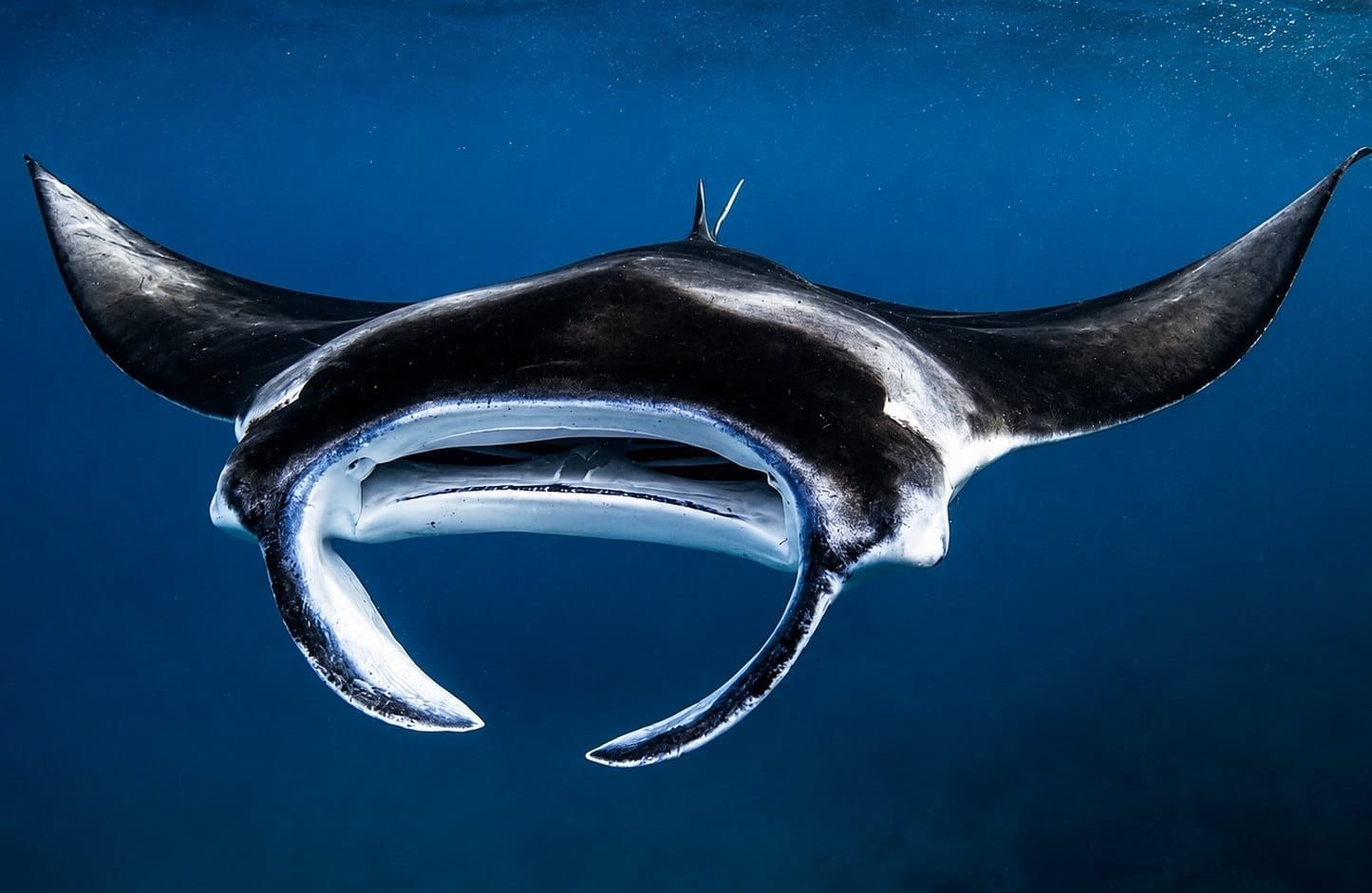
Like the whale shark grounds, Maamigili Beyru sits inside the South Ari Marine Protected Area, with fishing and anchoring restricted to protect the habitat. (Maldives Ministry of Environment)
If mantas are your priority over whale sharks specifically, plan for February–April to hit peak season — but that window is also peak tourist season generally, so book accommodation and excursions further ahead than you would for quieter months.
Turtle Snorkeling
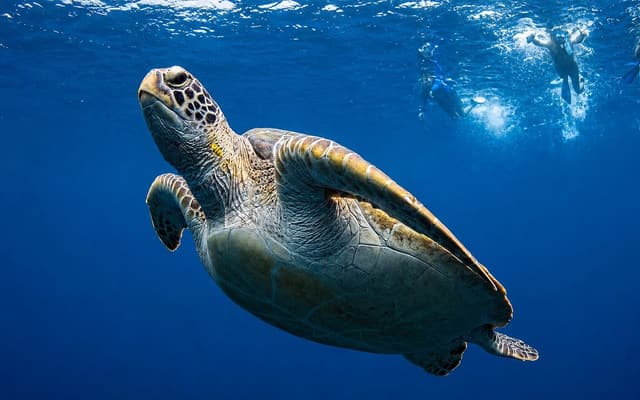
South Ari's reefs, Maamigili's included, are also a reliable spot for sea turtles, seen alongside the atoll's better-known whale sharks and mantas on the same reef trips. Water temperatures average 27–30°C year-round, and the shallow, clear lagoon conditions typical of South Ari suit snorkelers of most experience levels, beginners included. (HIDMC)
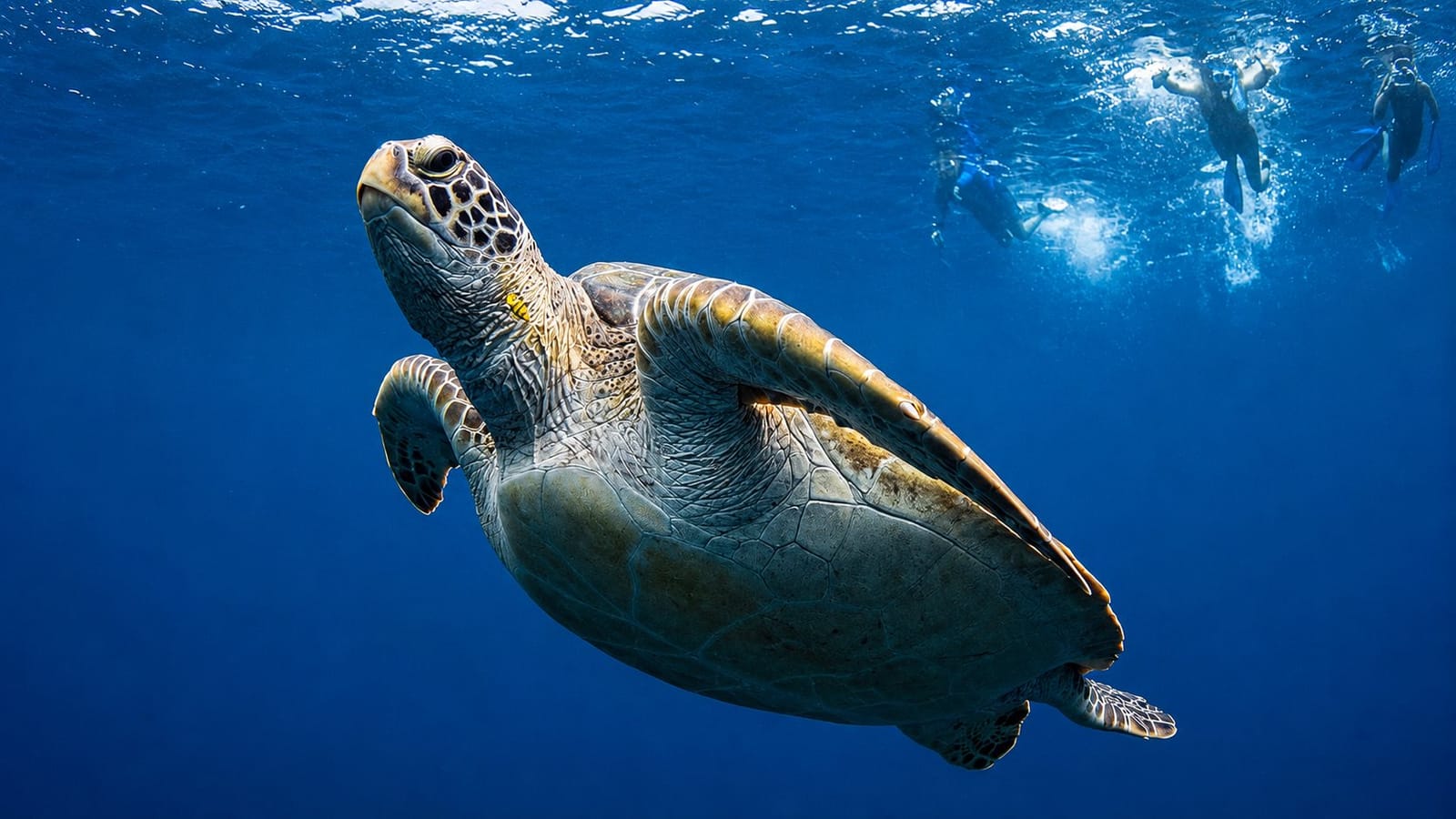
Turtle sightings are less predictable than whale shark sightings, which benefit from that resident population described above — so an excursion specifically framed as a turtle-point trip improves your odds over hoping to spot one during a general reef snorkel. Ask your guesthouse which nearby reef points have had the most consistent recent activity, since that can shift.
Bikini Beach, Maamigili
Like most inhabited local islands in the Maldives, Maamigili has its own designated Bikini Beach — a specific, fenced stretch of shoreline where swimwear is permitted, separate from the rest of the island where local dress norms apply. It's a real, named beach on Maamigili itself, independently documented in visitor photography from two other guesthouses on the island, La Cabana Maldives and Koimala Inn — not a beach on a neighboring island. (Tripadvisor: La Cabana Maldives; Tripadvisor: Koimala Inn)
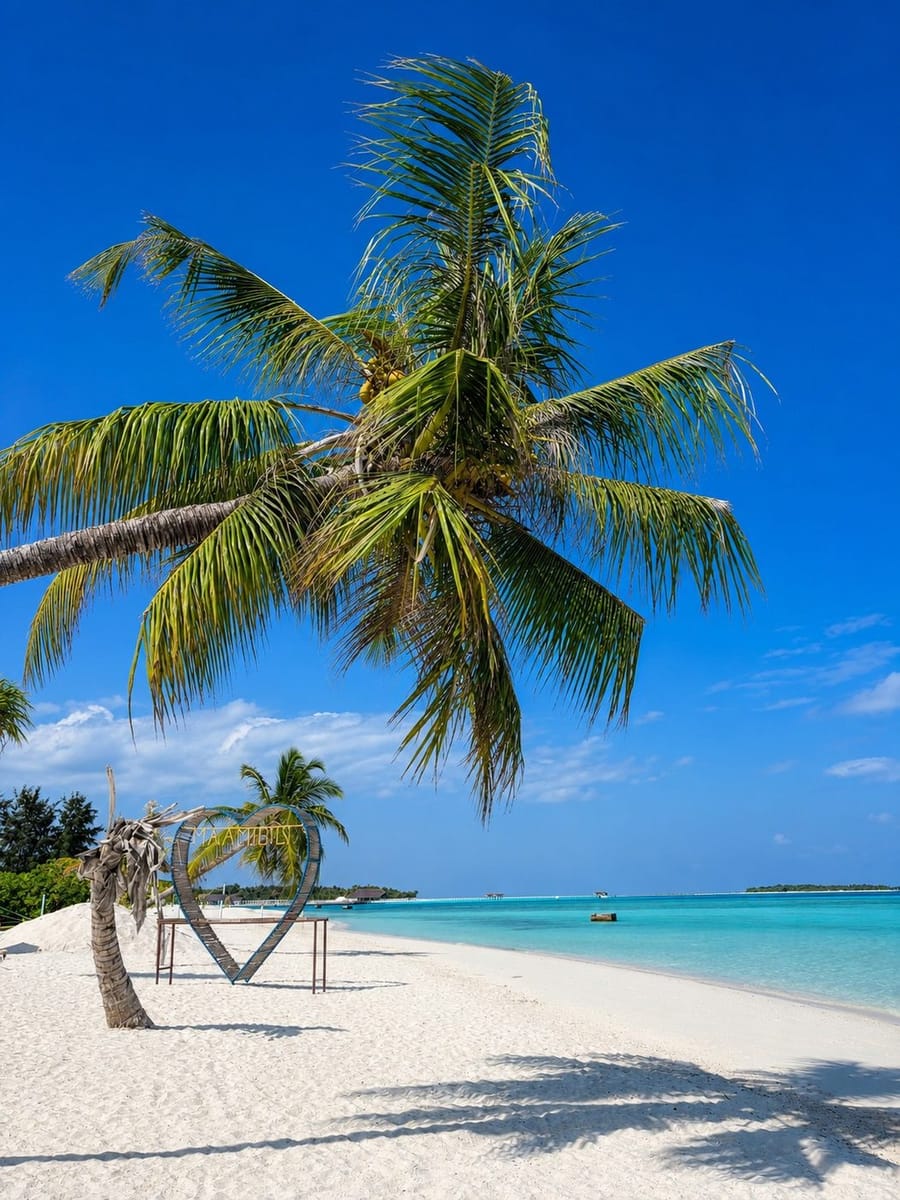
This dual dress-code system — swimwear at a designated bikini beach, modest dress elsewhere — is standard across nearly all inhabited local islands in the Maldives, not something unique to Maamigili. See Local Customs and Etiquette below for the fuller explanation of why.
Ask your guesthouse for current walking directions to Bikini Beach when you arrive — small local islands occasionally shift exactly which stretch is designated, and staff will have a faster, more current answer than any guide can guarantee.
Things to Do in Maamigili
Beyond whale shark and manta ray excursions, guesthouses on Maamigili and elsewhere in South Ari commonly organize: reef snorkeling trips, sandbank visits, dolphin watching, sunset cruises, sunset fishing trips (often with an on-board or beach barbecue dinner), and island-hopping day trips. (The Backpacking Housewife)
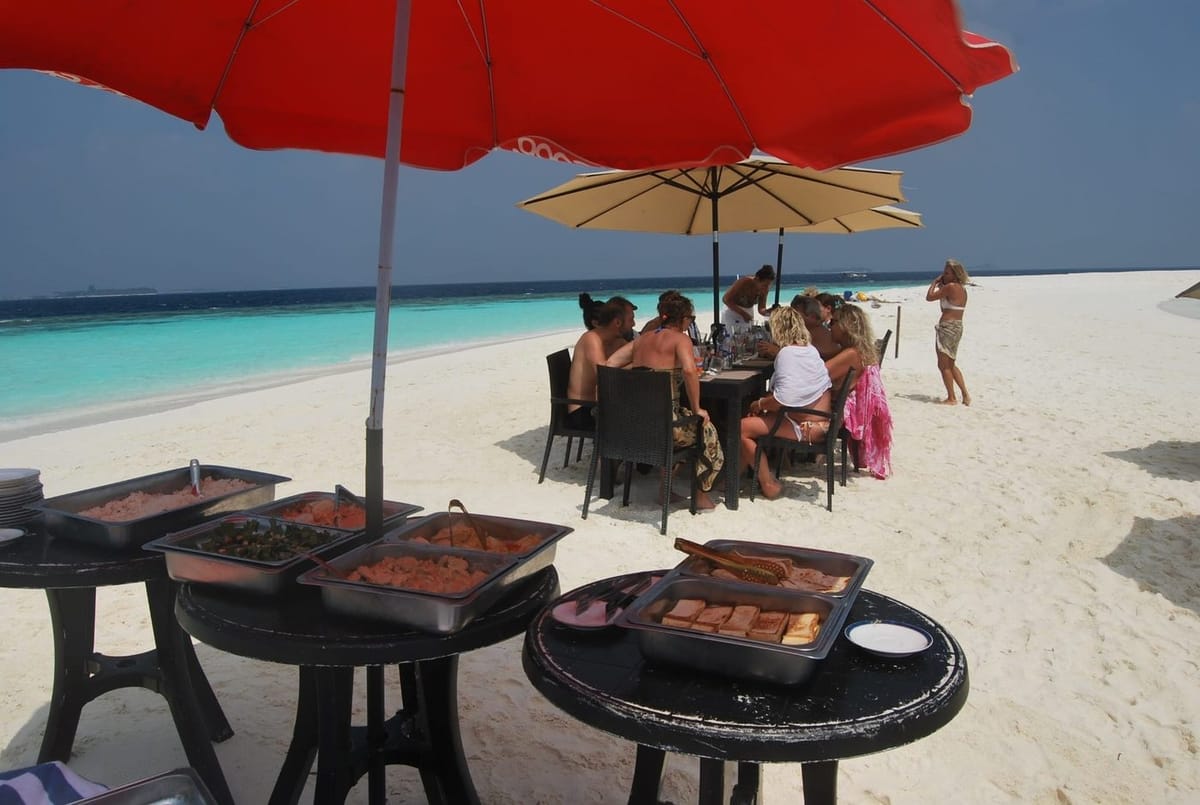
Away from the water, the island itself is small enough to walk in an afternoon — the working harbour, the main street and its shops, and the everyday rhythm of a Maldivian fishing island are, for many visitors, as much a part of the appeal as anything underwater.
Planning 4–5 nights? A reasonable spread: one whale shark excursion, one manta ray or reef-snorkeling trip (season permitting), one sandbank or sunset-fishing trip, and at least one unplanned afternoon to walk the island and find Bikini Beach without a fixed itinerary. Most guesthouses, Vilu Residence included, arrange these excursions directly rather than requiring separate third-party bookings.
Want the fuller list of excursions and day trips? See Things to Do in Maamigili → · Prefer a bundled itinerary instead? See Holiday Packages →
Local Customs and Etiquette
Maamigili, like every inhabited local island in the Maldives, runs on Islamic cultural and legal norms as a matter of everyday community life. Two things that affect a visitor directly:
Alcohol and pork aren't sold or served on the island. Both are prohibited on local inhabited islands throughout the Maldives; only private resort islands, operating under separate licensing, can serve alcohol to guests. (Sri Lanka-Maldives.com; Maldives.com)
Modest dress is expected outside Bikini Beach. Shoulders and knees covered in the village, shops, cafés, and other public spaces — for both men and women. Swimwear stays at the designated beach. (Maldives.com)
In practice this is an easy adjustment, not a real obstacle: a light cover-up or sarong over swimwear for the walk between the beach and your guesthouse, ordinary clothing elsewhere on the island, and you're covered.
Dhivehi is the official language and the everyday language of Maamigili's residents, but English is widely spoken in guesthouses, restaurants, and by tour operators, since tourism is a meaningful part of the island's economy. Crime is generally very low, in line with most inhabited Maldivian islands, and it's common for visitors to walk around freely.
Weighing a local island against a resort stay more broadly? Guesthouse vs. Resort →
Where to Eat
Maamigili has a small number of local restaurants and cafés, most concentrated along the main street and near the harbour. Reported options include Green Park Café, near the State Bank of India branch, serving Indian and Maldivian dishes, and Maaniya Café, known for its atmosphere and varied menu. The small cafés and tea shops right by the harbour are a good bet for a casual meal with a view of everyday harbour life — fishing boats coming and going, locals gathering for tea. (Maldives Magazine)
Most guesthouses on the island, including those catering mainly to international guests, also serve meals directly — typically a mix of Maldivian specialties and more familiar continental dishes for guests wanting variety across a multi-night stay.
For a genuine taste of the island rather than a menu built for international palates, the short walk to one of the harbour-side cafés is worth it — expect simple, inexpensive Maldivian and South Asian-influenced food rather than resort-style dining, which is part of the appeal.
Where to Stay
Accommodation on Maamigili is guesthouse-based, not resort-based — there's no private resort island within Maamigili itself, since it's an inhabited local island rather than an uninhabited resort concession. Named guesthouses on the island include La Cabana Maldives, Koimala Inn, Shamar Guesthouse & Dive (the island's dedicated dive base), White Sand Inn, and Vilu Residence. (Maldives Magazine; Maldivesnomad)
The broader choice — a local-island guesthouse versus a private resort island — is a structural one, not a quality judgment. Both are legitimate ways to experience the Maldives; which fits depends on what you're actually optimizing for:
| Criteria | Local island guesthouse (e.g. Maamigili) | Private resort island |
|---|---|---|
| Typical cost | Lower — often a fraction of resort per-night rates | Higher, sometimes substantially |
| Access to marine life | Direct, when the island sits near the reef/MPA | Direct too, but limited to that resort's house reef and excursion range |
| Alcohol | Not available — local-island law | Available under resort license |
| Dress code | Modest dress expected outside Bikini Beach | No restrictions on resort grounds |
| Community contact | Real, everyday local-island life | Minimal — self-contained resort environment |
| Transfer | Varies by island; Maamigili has its own airport | Often flight + separate speedboat/seaplane leg |
The honest framing: a resort is the right call if an all-inclusive, self-contained stay with alcohol on-site is the priority. A guesthouse island like Maamigili is the right call if value, direct access to the same wildlife and reefs at a fraction of the cost, and genuine contact with Maldivian island life matter more — with the trade-off of following local-island norms for the length of the stay.
Why Stay at Vilu Residence
Among Maamigili's guesthouses, Vilu Residence is a small, six-room property close to the harbour — which matters in practice, since most whale shark, manta ray, and reef excursions leave from there directly. Because Villa International Airport sits on the island itself, guests arriving by domestic flight aren't looking at a separate boat transfer afterward; it's a short walk or a brief tuk-tuk ride from the runway.
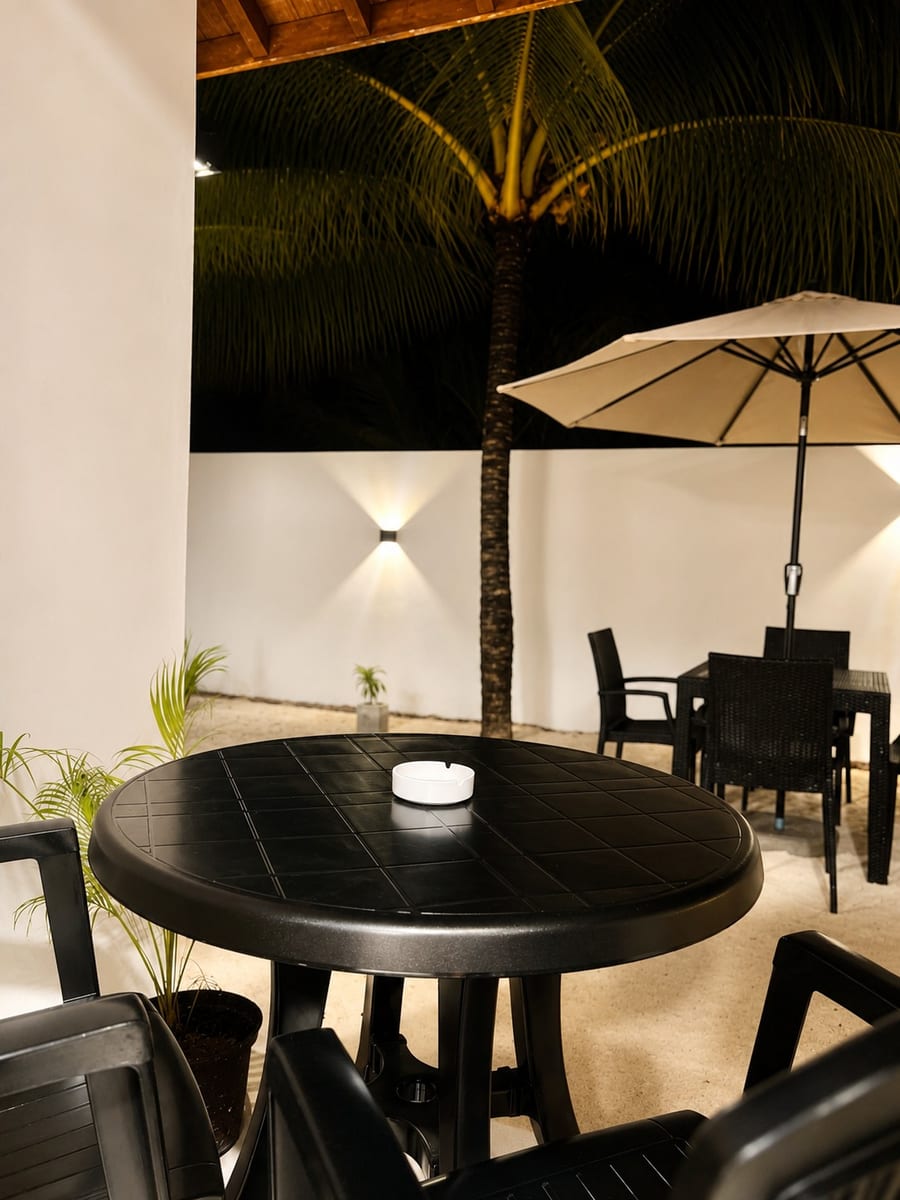
Rooms are split across two categories — a Double Room and a Deluxe Family Room, the latter with an open-deck option — built for couples, solo travelers, and small families rather than large groups. The same local-island trade-offs covered earlier in this guide apply here too: no alcohol on-site, and the same modest-dress expectations outside Bikini Beach as anywhere else on Maamigili.
Practical Information
Visa
Free 30-day visa on arrival for nearly all nationalities, no advance application. See requirements below.
Currency
Maldivian Rufiyaa (MVR); US dollars widely accepted and easily exchanged.
Language
Dhivehi is official; English is widely used in tourism-facing businesses.
Time zone
Maldives Standard Time, UTC+05:00, year-round — no daylight saving.
Visa-on-arrival checklist: passport with Machine Readable Zone (MRZ), valid at least one month beyond arrival · confirmed return or onward ticket · confirmed accommodation booking · sufficient funds for the stay · a Traveler Declaration completed within 96 hours of travel. Extensions up to 60 days total are possible in-country for a MVR 750 fee. (Maldives Immigration; VisaIndex)
Bring cash in small denominations — USD or MVR — for local cafés and shops that may not take cards, and confirm your guesthouse's excursion-booking process once you've checked in rather than assuming everything needs pre-booking online. Most local-island guesthouses, Vilu Residence included, arrange excursions directly once you've arrived.
Visa rules can change — confirm current requirements directly with Maldives Immigration before you travel rather than relying solely on this or any third-party guide.
Frequently Asked Questions
Where exactly is Maamigili located?
Is Maamigili the same as South Ari Atoll?
What is Maamigili's population?
Why is Maamigili sometimes called "Whale Shark Island"?
Does Maamigili have its own airport?
When did Villa International Airport open?
How do I get from Malé to Maamigili?
How much does a flight from Malé to Maamigili cost?
How many flights run between Malé and Maamigili daily?
Do I need a boat transfer after landing at Villa International Airport?
Can I see whale sharks near Maamigili year-round?
Is the whale shark population near Maamigili migratory?
How many whale sharks have been identified in South Ari Atoll?
What is the best time of year to see whale sharks near Maamigili?
Can I touch a whale shark while snorkeling?
Are manta rays found near Maamigili too?
When is manta ray season near Maamigili?
Is South Ari Atoll a good place for turtle snorkeling?
What is Bikini Beach on Maamigili?
Why can't I wear a bikini everywhere on Maamigili?
Is alcohol available on Maamigili?
Do I need a visa to visit Maamigili?
What documents do I need for the visa on arrival?
Can I extend my Maldives visa beyond 30 days?
What currency is used on Maamigili?
What language do people speak on Maamigili?
Is Maamigili safe for travelers?
What time zone is Maamigili in?
How big is Maamigili?
What's the weather like on Maamigili?
What is the wettest month near Maamigili?
Are there resorts on Maamigili itself?
What kind of accommodation is available on Maamigili?
Is there a dive center on Maamigili?
What food is available on Maamigili?
What other activities can I do on Maamigili besides whale shark snorkeling?
Is Maamigili suitable for families?
How does staying on Maamigili compare to staying on a resort island?
Can I book excursions directly through my guesthouse?
Is Maamigili a good base for a first-time Maldives trip?
What should I pack for a trip to Maamigili?
Do I need travel insurance to visit the Maldives?
Conclusion
Maamigili isn't trying to be a resort island, and that's the point. It's a working Maldivian island that happens to sit beside one of the most reliable whale shark grounds on the planet, with its own airport, a real village, and guesthouse prices instead of resort ones. For travelers who want direct access to that marine life — whale sharks every month of the year, mantas in season, turtles and reef life in between — without the cost or the self-contained bubble of a private resort, it's a genuinely strong option, not just a budget compromise.
The trade-offs are real, and worth knowing before you land: no alcohol on the island, modest dress outside Bikini Beach, and a smaller, quieter destination than the postcard-resort image of the Maldives. For the right traveler, those aren't downsides — they're what makes the stay feel like the Maldives beyond the brochure.